Search Recipe

Showing posts with label Fish. Show all posts

Sinigang na Tilapia Recipe

Sinigang is a common dish for Filipinos. It is a soup characterized by its sour flavor. Different fruits can be used as souring agent such as tamarind (which is the most common), guava, green mango, kamias or bilimbi and santol. Back home, my most favorite fruit ingredient for sinigang is kamias or bilimbi, next is tamarind. We have a kamias tree in the backyard that bears fruits abundantly when in season. I hope it is still alive up to this day. That’s one of the things I would check when we go home this December for vacation.

Nowadays, powdered soup base or cubes have become popular in place of the natural fruits, especially for OFWs like us. They are commonly known as sinigang mix and are made of tamarind or guava. The tamarind powdered soup base is what I used for my sinigang na tilapia recipe. I usually like my sinigang to be really sour. Fortunately, hubby likes the same and so I used the whole sinigang mix pack.

It is best to add an assortment of vegetables to sinigang. I used pechay and banana blossom for this recipe. I learned from my mother that the banana blossom will make the soup white in color. Just be careful on the timing of slicing the banana blossom. I suggest slicing it seconds before it is added in the stew. Slicing it early will darken the color of the banana blossom.

Photobucket
Sinigang na Tilapia

Here’s my recipe for the Sinigang na Tilapia:

Ingredients:
2 pcs whole tilapia fish
1 bunch pechay
1 pc banana blossom, sliced to ½ inch thick, remove tough petals
2 pcs tomatoes, quartered
1 thumb-sized ginger, sliced thinly
1 onion, sliced
2 pcs banana chili
1 pack sinigang mix (use only half if you prefer less sour soup)
2 cups water
Salt

Cooking Procedure:
Bring to boil 2 cups of water. Add tomatoes and onion. Simmer until the tomatoes and onions are tender. Add sinigang mix and ginger. Cook until sinigang mix has completely dissolved. Add tilapia and vegetable ingredients. Season with salt. Cook until tilapia is done. Adjust the seasoning according to your taste.

Paksiw na Galunggong Recipe

Paksiw na Galunggong is one of the varieties of paksiw na isda recipes. I like the small-size galunggong or scad fish better than the large ones as I find them more flavorful.

Paksiw is a process of stewing meat or fish in vinegar and some spices. The spices added to it may vary depending on the main ingredient, regional cooking style or preference of the cook himself.

When I’m making paksiw na isda, I don’t use garlic as most people would do. Instead, I’m using onion, which I think makes the broth more appetizing. Another tweak that I do is I add a teaspoon of olive oil to the broth just two minutes before I remove it from heat.

Another tip that is worth trying is to keep the paksiw for a day in the ref then re-heat. It’s much tastier this way. Also, it is best to pair it with garlic fried rice. Yum!

Photobucket
Paksiw na Galunggong

Here’s my recipe for the Paksiw na Galunggong:

Ingredients:
250 grams Galunggong (scad) fish
½ cup vinegar
¼ cup water
1 thumb size ginger root, crushed or finely sliced
1 small onion, sliced
3 pieces banana pepper (siling haba)
2 large eggplants (optional), sliced according to your liking
1 teaspoon olive oil (optional)
Pepper, roughly ground
Salt

Cooking Procedure:
Clean fish well. Remove gills, innards, etc. Combine all ingredients in a pot except olive oil. Turn on the stove and cook from 10 to 15 minutes over low fire, or until the fish and eggplants are cooked. Just keep in mind to add in the olive oil two minutes before turning off the heat. Serve with steamed rice or fried rice.

Guinataang Tanigue (King Fish) Recipe

Photobucket
Guinataang Tanigue

When I was growing up, I never liked guinataan dishes (except for the deserts) because my mother rarely cooked guinataan. As time went by, I learned to appreciate guinataan flavored dishes. What has drawn me to it is the rich taste of the coconut milk combined with the ginger flavor.

Since I’m a veggie lover I particularly like Guinaatang Sitaw and Kalabasa. Fish cooked in coconut milk has also become one of our favorite dishes.

From the supermarket shelf we went to yesterday, the steak-cut tanigue or king fish were neatly packed fresh and clean. It is always wonderful to cook fresh fish as the taste is quite delicious and the fish meat is tender and firm. Since our last guinataan dish has been a while ago, we decided to cook the tanigue this way.

Here is the Guinataang Tanigue (King Fish) Recipe:

Ingredients:
½ kilo tanigue, steak cut
250ml coconut milk
1 tbsp. ginger, thinly sliced long strips
2 cloves garlic, minced
1 medium size onion, sliced
3 tbsp. fish sauce or patis
1 bunch pechay or bok choy
4 pcs. banana chili
Cooking oil

Cooking Procedure:
1) Heat oil in a pan.
2) Sauté minced garlic. Do not brown.
3) Add ginger, sauté for 30 seconds.
4) Add onions and cook until translucent.
5) Pour in fish sauce. Sauté for a few seconds.
6) Pour in the coconut milk. Cook over medium heat for 8-10 minutes or until the natural oil from the coconut milk comes out. Stir occasionally.
7) Add the banana chili and fish. Simmer for 5 minutes.
8) Add pechay or bok choy. Simmer for another minute or until the bok choy have wilted.
9) Serve hot with steamed rice.

Fish Spring Roll Recipe


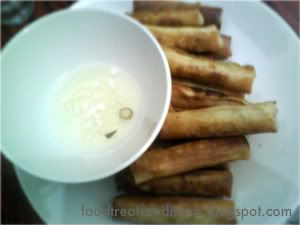
Want to try something different for your fish craving? Why not make fish spring roll. It’s healthy and great for light snack or party meal.

This spring roll recipe is quite different than usual. My friend and a former officemate, Gemma, introduced to me this dish, which she fondly calls fish shanghai. Shanghai spring roll is widely known in the Philippines as lumpiang shanghai, which is usually prepared with pork or beef. I first tasted fish shanghai during her birthday celebration in 2008, and I got hooked to it since. Fish spring roll is simply delicious and far healthier than its beef or pork counterpart.

Here’s the recipe for fish spring roll.

Ingredients:
1 kilogram fresh mackerel fish, thoroughly cleaned (or any fresh fish of your choice)
2 pieces medium size carrot, grated or finely chopped
2 pieces medium size onion, (one is grated or finely chopped, the other piece is simply sliced)
1 large stalk celery, grated or finely chopped
1 large egg
Ginger
Vinegar
Water
Salt
Ground black pepper
Pastry wrapper (about 60 pcs)

Instructions:
Boil the mackerel fish in a deep skillet together with ginger, sliced onion, vinegar, salt, ground pepper and water. While cooking the fish, start grating carrots, onion and celery for the spring roll mixture. When the fish is done, separate its meat from its bones, shred and mix with the grated ingredients. Add egg, and then season with salt and black pepper. Wrap a teaspoon size of the mixture using the pastry wrapper. Fry in a low fire until golden brown.


Dip fish spring roll with your favorite sauce (ketchup, sweet chili sauce or vinegar).

Preparation and cooking time: 60 minutes
Serving size: 6-8

Bon appétit!

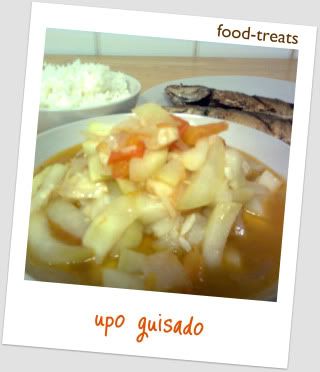
Upo Guisado and Fried Fish


One of my favorite meal combinations is vegetable dish and fried fish simply because it’s healthy, fast and easy to prepare. Perfect for working couples like me and Boq. In a breeze, dinner was ready with vegetable, fried fish and rice served on the dining table. It was simple yet healthy and yummy.

Ingredients:
  • 1 large Upo, sliced into strips (Upo is the Filipino term for bottle gourd, it is in the same family of bitter gourd)
  • 1 medium-size tomato, chopped
  • 1 onion, sliced
  • 3 cloves garlic, crushed
  • fish sauce
  • beef bouillon cube (optional)
  • vegetable oil

    Cooking Instruction:
    Heat oil in a pan. Sauté garlic and onion. Add tomato and cook for 3 minutes. Add fish sauce and beef bouillon cube. Add sliced upo and let it simmer until cook while stirring occasionally. Add some water as you desire to increase the sauce.

    Preparation and cooking time: 15 minutes
    Serving size: good for 2 persons

    Bon Appetit!
  • LinkWithin

    Blog Widget by LinkWithin
    Page copy protected against web site content infringement by Copyscape